
By Zubair
Lahore
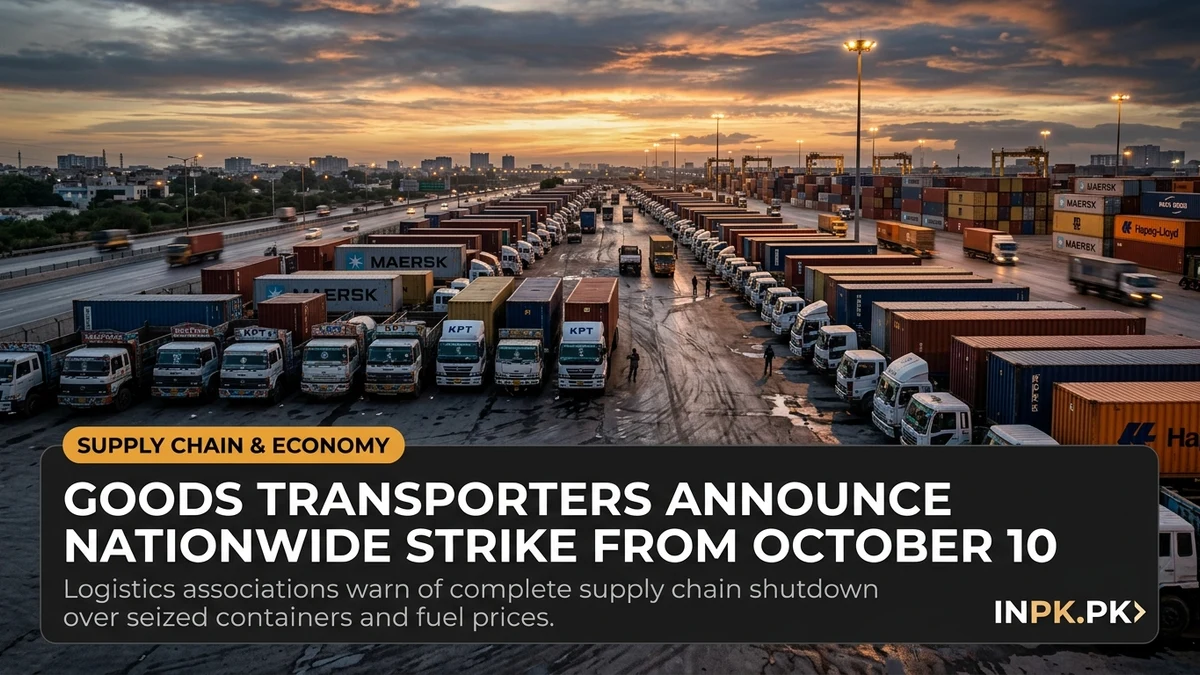
The All Pakistan Goods Transporters Association (APGTA) has formally issued a nationwide strike call scheduled to take effect from October 10, 2026, threatening a complete and indefinite cessation of domestic freight logistics, maritime container evacuation, and industrial raw material supply lines across Pakistan. The announcement follows escalating frustration over the arbitrary administrative impoundment of commercial shipping containers for political security barricades and soaring operational overheads driven by recent petroleum price adjustments.
Addressing an emergency press conference, central leadership of the goods transport alliance stated that hundreds of privately owned cargo containers and heavy-duty prime movers have been seized without legal compensation by district administrations across Punjab, Khyber Pakhtunkhwa, and the federal capital to barricade highways ahead of political demonstrations. Transporters highlighted that these forced detentions have severely disrupted commercial commitments, damaged perishable freight, and subjected drivers to harsh road conditions.
Core Transporter Demands and Supply Chain Friction
The association has submitted a comprehensive charter of demands to the federal ministries of Communications, Finance, and Maritime Affairs. The primary stipulations include:
- Immediate and unconditional release of all commercial cargo containers and transport vehicles seized for security blockades, accompanied by standardized financial compensation for detention delays.
- Immediate rationalization of national highway toll plaza tariffs, which transporters claim have surged unsustainably over recent fiscal quarters.
- Fiscal relief on diesel prices and domestic motor spirit to offset severe inflationary pressures on logistics operators.
- Abolition of arbitrary axle-load enforcement penalties that disproportionately penalize domestic fleet owners without standardized weighing infrastructure.
Logistics operators warned that unless the federal government convenes formal negotiations to address these structural grievances before October 10, all inter-city cargo dispatch operations, port container clearance at Karachi Port and Port Qasim, and distribution of essential industrial commodities will be brought to an absolute standstill.
Implications for National Commerce and Export Commitments
Economic analysts and industrial associations have raised immediate alarms regarding the macroeconomic repercussions of a nationwide freight paralysis. A logistics shutdown would jeopardize Pakistan’s export fulfillment—particularly textile shipments facing tight delivery deadlines in European and American markets—while exacerbating domestic market shortages of essential foodstuffs, industrial raw materials, and pharmaceutical supplies.
The Federation of Pakistan Chambers of Commerce and Industry (FPCCI) and major trade bodies have urged federal authorities to intervene urgently, initiate direct talks with transporter leadership, and institute standardized protocols to prevent the disruption of commercial freight infrastructure for political containment.
For verified reporting on commercial infrastructure, national supply chains, and macroeconomic trends, explore INPK Business and check continuous updates on INPK News.