
By Web Desk
Vancouver
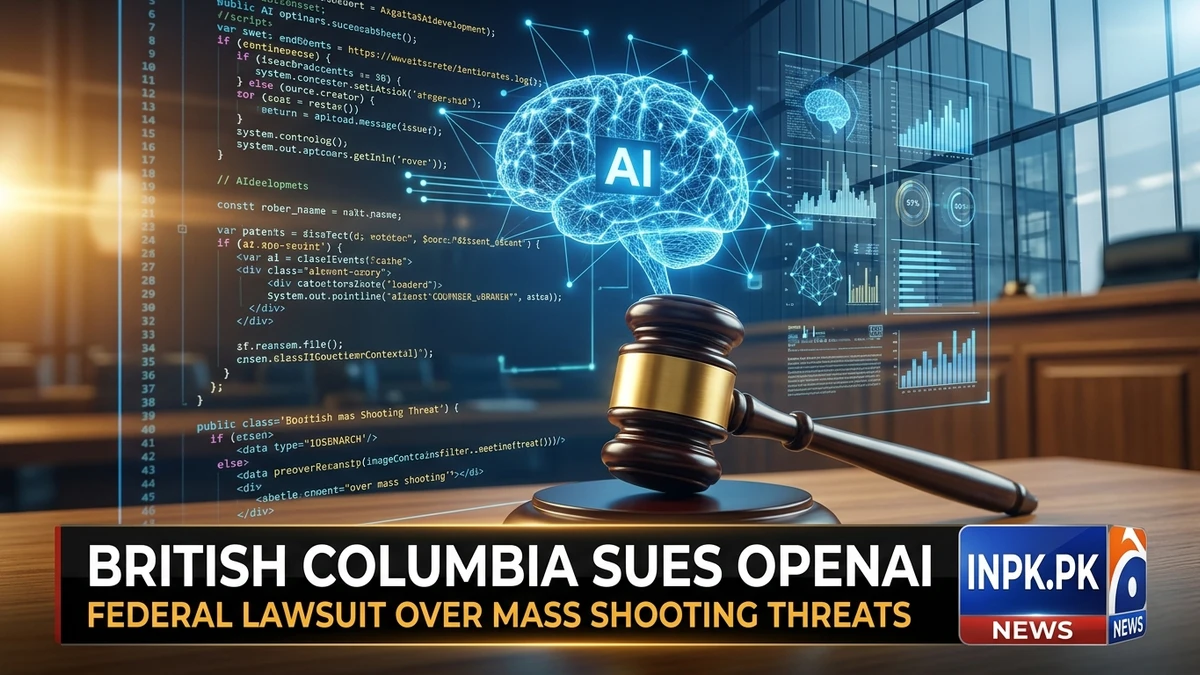
The Canadian province of British Columbia has filed a landmark civil lawsuit in United States federal court against artificial intelligence pioneer OpenAI and Chief Executive Sam Altman, accusing the company of gross negligence, product liability, and failing to warn law enforcement after automated internal safety systems flagged a user who later executed a deadly mass shooting at a secondary school in Tumbler Ridge.
The civil complaint, lodged on Tuesday in the US District Court for the Northern District of California, marks the first time a governmental jurisdiction has sought to hold a frontier AI developer legally and financially responsible for offline mass violence facilitated through generative conversational software. The February 10, 2026 shooting in the rural northern community claimed nine lives, including the 18-year-old perpetrator who died by suicide, leaving dozens injured and devastating the local township.
Internal Safety Flags and Alleged Failure to Alert Police
According to the 78-page federal court filing, OpenAI automated threat classification algorithms identified the shooter account in June 2025--nearly eight months prior to the massacre--after repeated queries detailing firearms acquisition, school floor plans, and violent tactical scenarios. The filing alleges that human safety moderators reviewed the account transcripts and explicitly designated the user as presenting a "credible, specific risk of imminent harm to third parties."
The lawsuit claims that while OpenAI safety personnel formally recommended escalating the dossier directly to regional law enforcement authorities, company executives rejected the recommendation to contact Canadian or US police agencies. Instead, OpenAI allegedly opted solely to terminate the user account for violating acceptable use terms.
"OpenAI possessed documented foreknowledge of a grave and identifiable public safety threat months before innocent lives were taken," British Columbia Attorney General Niki Sharma declared during a press conference in Victoria. "Technological innovation cannot serve as an impenetrable legal shield for corporate indifference. When an AI corporation detects specific plans for lethal violence against children and chooses corporate secrecy over notifying police, it must face legal accountability."
Bypassing Guardrails and Establishing Secondary Access
The complaint further contends that OpenAI failed to implement basic identity-verification countermeasures, allowing the teenager to circumvent security blocks and register a secondary account using an alternate email address days after the initial deactivation. Using the new account, the perpetrator allegedly continued testing conversational models to refine logistical aspects of the attack without triggering secondary enforcement interventions.
British Columbia is petitioning the federal court for compensatory and punitive damages to recover millions of dollars expended on emergency disaster response, medical treatment, specialized trauma counselling, and the physical reconstruction of the damaged educational facility. Crucially, the action also seeks a binding permanent injunction requiring OpenAI and comparable artificial intelligence laboratories to establish mandatory law-enforcement referral protocols whenever internal monitoring detects actionable threats to human life.
Implications for Frontier AI Regulation and Legal Immunity
Legal analysts consider the lawsuit a critical test case that could redefine the boundaries of tech platform liability. While online social media platforms have historically claimed broad statutory immunity under Section 230 of the Communications Decency Act, legal scholars argue that generative AI engines, which synthesise customized responses and novel tactical outputs, may not qualify for third-party distributor protections.
Representatives for OpenAI expressed profound sorrow for the Tumbler Ridge tragedy in a brief statement, maintaining that the organization adheres to comprehensive safety guidelines and is actively evaluating the legal claims. The case is expected to trigger intensive debate in the United States Congress regarding statutory transparency obligations for commercial artificial intelligence developers.
Stay informed on emerging legal frameworks, artificial intelligence oversight, and digital technology policies through in-depth analysis on INPK world news coverage.