
By Web Desk
Lahore
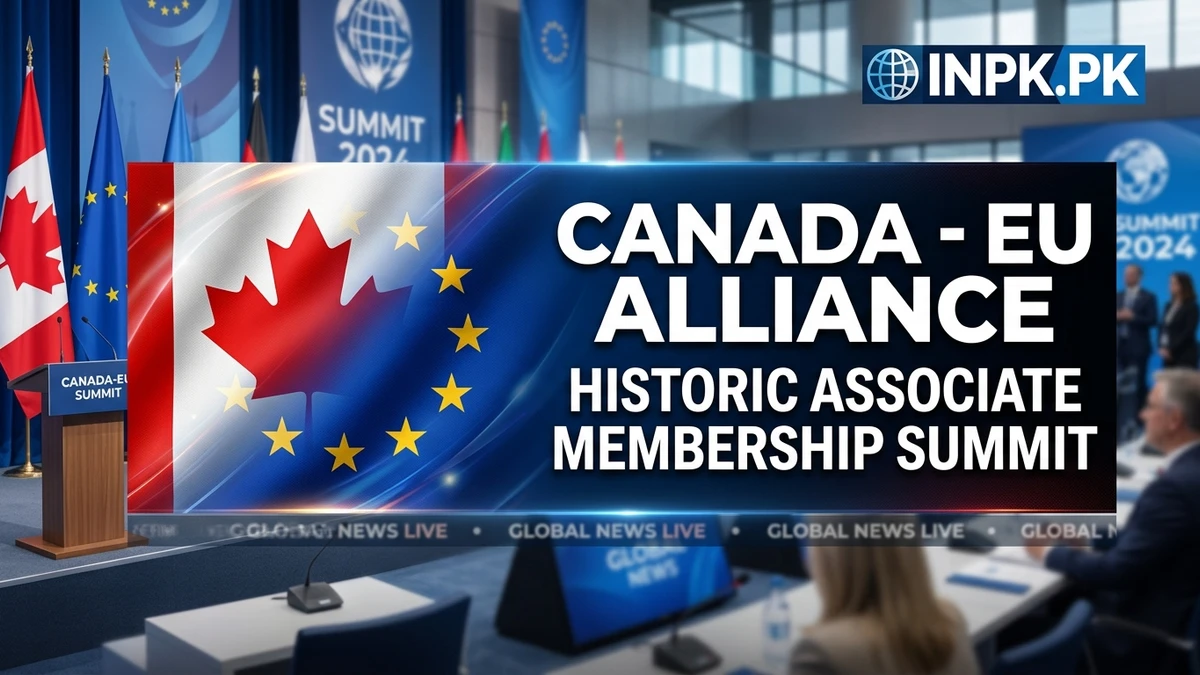
Canadian Prime Minister Mark Carney and French President Emmanuel Macron held a landmark diplomatic summit on Sunday, advancing talks on an unprecedented proposal for Canada to become the European Union's first-ever "associate member" and establishing a strategic transatlantic alliance amid escalating global trade tensions.
The high-level meeting, convened on the French territory of Saint-Pierre and Miquelon off the coast of Newfoundland, follows a formal invitation issued by European Commission President Ursula von der Leyen. Von der Leyen called on Ottawa to join an "Alliance for the Future" aimed at bolstering joint defense procurement, critical mineral supply chains, liquefied natural gas (LNG) exports, and advanced artificial intelligence development.
Diplomatic Alignment and the Unique Alliance Framework
Addressing reporters following bilateral discussions, Prime Minister Carney welcomed the European partnership as a vital step to strengthen Canadian economic sovereignty and diversify trade relationships. However, Carney emphasized that Canada is not seeking formal accession to the 27-nation European bloc, describing the initiative instead as a tailored, comprehensive strategic alliance.
European legal experts and diplomatic teams are currently drafting a customized framework for the association, as existing European Union treaties restrict full membership to European states. The prospective agreement is expected to include streamlined sectoral labor mobility, reciprocal research funding, and integrated critical infrastructure initiatives without requiring Canada to adopt EU regulatory mandates or surrender domestic jurisdiction.
Washington Reaction and Transatlantic Trade Friction
The diplomatic breakthrough has sparked fierce pushback from Washington. United States President Donald Trump strongly criticized the prospective pact, characterizing the concept of Canadian associate EU membership as "laughable" and warning that the creation of an economic or security bloc outside North American trade frameworks could be viewed by the White House as a hostile economic act.
The United States administration warned that further bilateral tariffs could follow if Canada proceeds with preferential European trade mechanisms. Despite the warning, French President Macron reiterated European commitment to deep transatlantic cooperation, stating that democratic partners must secure autonomous supply lines and energy stability in an era of unpredictable tariff regimes.
Strategic Energy and Critical Mineral Cooperation
Energy security formed a centerpiece of the summit agenda. European leaders are eager to secure expanded supplies of Canadian liquefied natural gas and rare earth elements necessary for clean technology and defense manufacturing. Canadian energy producers and provincial leaders have signaled strong interest in developing export infrastructure capable of supplying European ports directly from Atlantic terminals.
Readers can follow live international diplomacy, trade developments, and global economic updates through INPK world news coverage as Canadian and European negotiators prepare formal draft terms ahead of the United Nations General Assembly.