
By Web Desk
Lahore
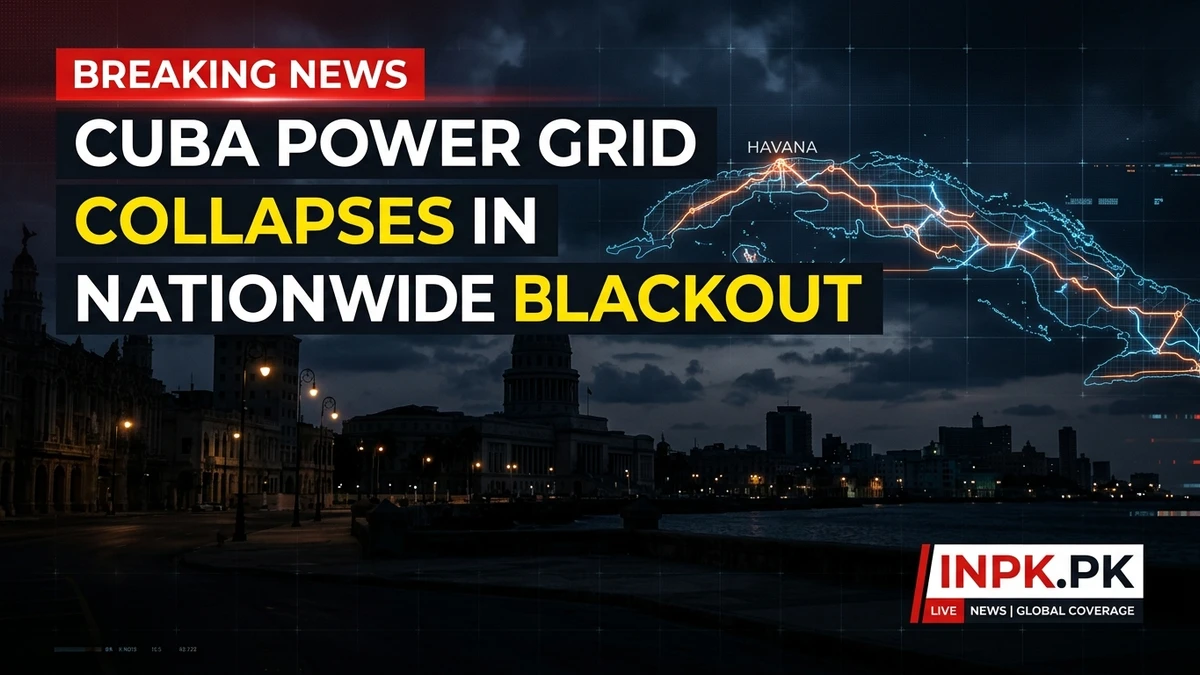
Cuba has been plunged into a major nationwide blackout after the island's primary electrical grid suffered a total systemic collapse, leaving an estimated 10 million residents without electricity and severely disrupting vital public services across all fifteen provinces, state utility Union Electrica (UNE) confirmed on Saturday.
The catastrophic outage occurred following an unexpected failure along high-voltage transmission lines connecting the western and central electrical grids, triggering automatic emergency shutdowns across key thermoelectric generating facilities, including the pivotal Antonio Guiteras power plant in Matanzas. Grid operators declared a state of "total disconnection" of the National Electric System (SEN), bringing industrial output, water distribution networks, and telecommunications infrastructure to a near-total standstill.
Emergency Restoration Efforts and Urban Impact
Energy ministry engineers and specialized technical crews initiated a phased, micro-system restoration protocol late Friday night, establishing isolated regional generation islands to restart major plants. By Saturday afternoon, officials reported that partial power had been restored to approximately half of Havana's municipal circuits, primarily prioritizing hospitals, emergency response centers, and essential water pumping facilities.
However, the majority of provincial municipalities remain in prolonged darkness, with residents in central and eastern regions enduring outages exceeding 48 to 60 hours. Tropical heat coupled with the loss of residential refrigeration has raised acute concerns regarding food spoilage and potable water access, prompting municipal authorities to deploy mobile diesel generators to critical healthcare wards.
Underlying Structural Factors and Sanctions Debate
The latest collapse represents the seventh widespread grid failure recorded in Cuba this year, highlighting the extreme vulnerability of the nation's aging infrastructure. Decades-old Soviet-era thermoelectric stations, deferred maintenance cycles, and acute shortages of imported heavy fuel oil and diesel have left the island's energy reserve margins virtually exhausted.
Cuban authorities attributed the deepening crisis to strict foreign trade restrictions and banking sanctions, which government spokespersons described as an economic blockade that prevents the timely acquisition of replacement turbines, maintenance parts, and commercial fuel shipments. Conversely, international analysts and opposition figures pointed to state economic planning deficits, lack of capital reinvestment, and chronic bureaucratic inefficiencies as primary contributors to the chronic supply deficit.
Regional Repercussions and Humanitarian Concerns
Caribbean regional observers and humanitarian organizations have warned of escalating economic strain across the island as transport logistics and commercial food distribution falter under rolling power deficits. Civil defense teams remain on high alert as electrical engineers work around the clock to synchronize remaining generating units to the central grid without triggering secondary overloads.
Readers can follow live international developments, infrastructure updates, and geopolitical analysis through INPK news coverage as utility authorities continue grid restoration operations.