
By Web Desk
Lahore
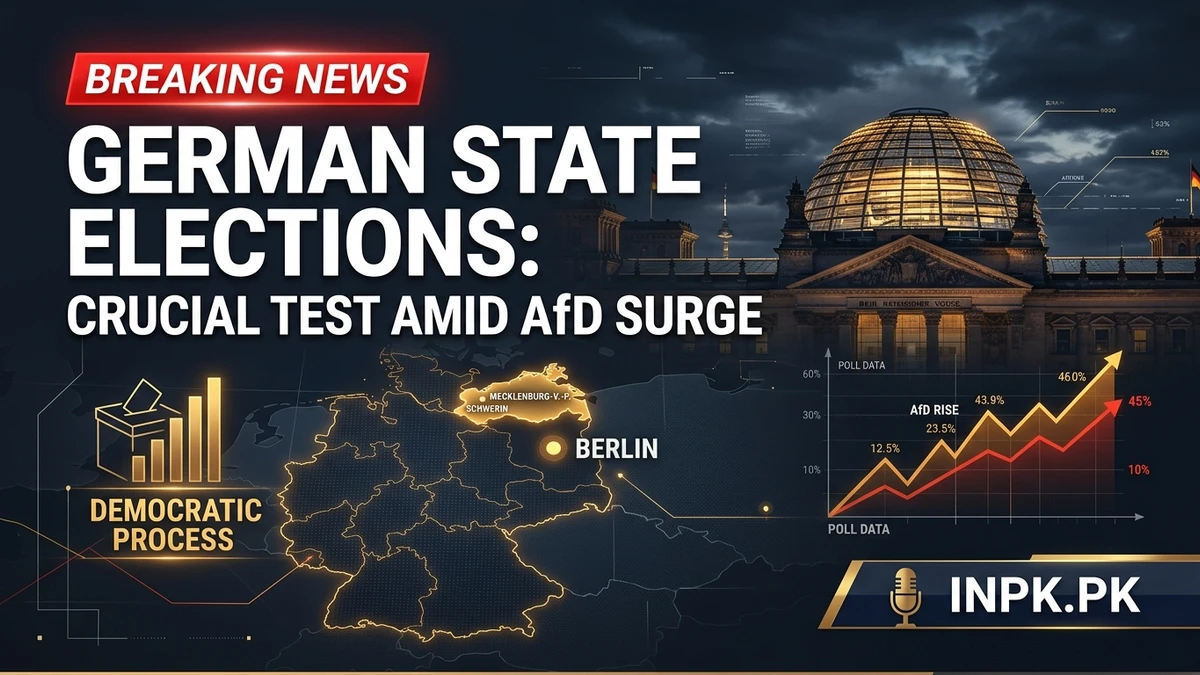
Voters across Berlin and the northeastern state of Mecklenburg-Western Pomerania cast ballots in critical regional elections on Sunday, presenting a defining political stress test for German Chancellor Friedrich Merz as the far-right Alternative for Germany (AfD) seeks to consolidate unprecedented electoral momentum across eastern regions.
The dual state elections follow a bruising setback two weeks ago in Saxony-Anhalt, where the AfD surged to within fractions of an outright legislative majority, rattling Berlin's governing coalition and driving the Christian Democratic Union (CDU) to historically low approval ratings. With federal surveys showing nationwide government satisfaction hovering near 14 percent, Sunday's vote carries acute implications for federal legislative stability, energy policies, and European Union asylum consensus.
High-Stakes Battlegrounds in Berlin and the North-East
In Mecklenburg-Western Pomerania, the contest has shaped into an intensely polarized duel between the center-left Social Democratic Party (SPD), steered by long-serving state Premier Manuela Schwesig, and a resurgent AfD campaign focused heavily on migration restrictions, industrial energy costs, and opposition to European defense subsidies for Ukraine.
State political analysts noted that the CDU faces severe existential pressure in the northeastern state, with preliminary polling indicating the party risks falling near the 5 percent electoral threshold necessary to retain parliamentary representation. In Berlin, while the city's complex multi-party coalition dynamics make an AfD-led administration mathematically unfeasible, substantial gains by populist factions threaten to complicate urban governance and municipal budget passage.
Economic Pressures, Migration, and Coalition Friction
The regional ballots reflect profound structural strains across Europe's largest economy, where prolonged manufacturing contraction, heightened corporate energy tariffs, and persistent disputes over federal fiscal debt brakes have eroded public confidence in mainstream centrist parties. Chancellor Merz's administration has struggled to harmonize conservative market deregulation demands with coalition commitments to industrial decarbonization.
AfD leaders have capitalized on voter fatigue over inflation and localized public service pressures, framing the elections as a referendum on Berlin's broader political establishment. Conversely, mainstream party leaders have urged high voter turnout to defend constitutional democratic norms, warning that far-right legislative obstruction could paralyze regional development and alienate foreign investment.
Broader Implications for European Policy Ahead of UNGA
The election outcomes will resonate beyond German borders, potentially reshaping Berlin's bargaining posture within the European Council regarding common defense financing, border controls, and cross-continental climate mandates as global leaders convene for the United Nations General Assembly in New York.
Readers can follow verified election outcomes, exit poll projections, and international political analysis on INPK news coverage as state election authorities commence ballot counting on Sunday evening.