
By Web Desk
Lahore
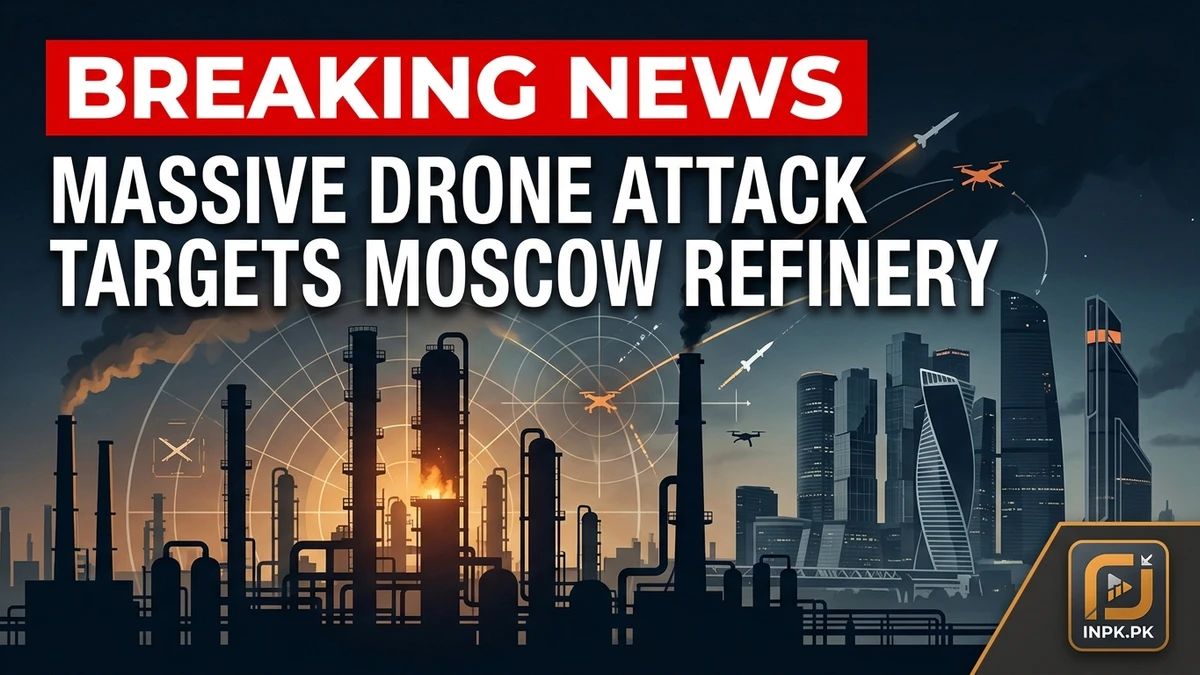
A massive long-range drone barrage targeted Moscow and its surrounding industrial belt on Sunday, striking the Moscow Oil Refinery in the Kapotnya district and sparking extensive fires on the final day of voting in Russia's nationwide parliamentary elections, municipal and defense authorities confirmed.
Moscow Mayor Sergei Sobyanin announced that air defense batteries and electronic warfare units intercepted hundreds of incoming unmanned aerial vehicles across the capital's defense perimeter. However, falling debris and direct impacts ignited a blaze at a separate technical installation within the Kapotnya refinery complex, located approximately 15 kilometers southeast of the Kremlin. Emergency response units deployed heavy firefighting equipment to contain the flames, while regional officials reported at least two fatalities and multiple injuries across the broader Moscow region.
Scale of the Coordinated Drone Incursion
According to operational statements from Russia's Ministry of Defense, Russian air defense networks engaged more than 1,600 drones across western border provinces, central regions, and the metropolitan capital over a 24-hour window. Approximately 450 drones were directed specifically toward Moscow airspace, representing one of the largest concentrated aerial incursions targeting the Russian capital since the outbreak of hostilities.
The attack triggered temporary ground stops and flight diversions across Moscow's major international aviation hubs, including Domodedovo, Vnukovo, and Zhukovsky airports. Civil aviation regulators later confirmed that normal airspace operations resumed following the completion of emergency clearance protocols.
Timing on Final Day of Russian Parliamentary Elections
The strike coincided with the concluding hours of Russia's three-day State Duma elections, which took place from September 18 to 20. Russian state officials condemned the barrage as a deliberate attempt by Ukrainian forces to disrupt voting procedures and create psychological panic among urban populations.
Ukrainian military officials, while adhering to their standard policy of neither formally confirming nor denying specific operations inside Russian territory, have consistently maintained that Russian energy facilities, refining complexes, and logistics hubs serve as legitimate military targets that sustain frontline combat operations.
Strategic Impact on Refining Capacity and Energy Logistics
The Kapotnya installation, operated by Gazprom Neft, is one of Russia's most critical fuel processing facilities, supplying approximately 40 to 50 percent of Moscow's gasoline and diesel consumption and a significant share of aviation fuel for the capital's airports. Industrial analysts noted that recurring strikes against refining infrastructure continue to strain Russia's domestic fuel distribution logistics.
Readers can follow live coverage of international security developments, energy market impacts, and Eastern European geopolitical analysis on INPK news coverage as technical teams assess structural damage at the site.