
By Zubair
Lahore
Marking the culmination of a multi-year digital transformation in border management and citizen verification, the Government of Pakistan has officially concluded the issuance of traditional Machine-Readable Passports (MRPs). The Directorate General of Immigration and Passports (DGI&P), operating under the Ministry of Interior, confirmed that all regional passport offices across Pakistan and foreign diplomatic missions overseas have transitioned exclusively to the production of next-generation digital e-passports.
The milestone decision brings an end to the 22-year era of standard machine-readable travel documents, which were first introduced in Pakistan in 2004. By retiring traditional printed booklets in favor of contactless chip technology, Pakistan aligns its travel credential architecture with the highest global civil aviation standards and international security frameworks.
Advanced Cryptographic Chip Architecture and Biometric Standards
The newly mandated electronic passport incorporates a secure electronic microchip embedded within the document's biographical data page. Built in strict compliance with the International Civil Aviation Organization (ICAO) Doc 9303 standards, the microchip securely stores encrypted biometric information, including optical facial recognition data, digital fingerprint telemetry, and cryptographic digital signatures issued by the national Public Key Directory (PKD).
The electronic credentials are protected by Public Key Infrastructure (PKI) encryption mechanisms, rendering the passport virtually immune to physical tampering, photo substitution, or fraudulent cloning. Security authorities emphasized that the technological upgrade eliminates vulnerabilities associated with forged travel documents, providing foreign immigration authorities with verifiable digital proof of identity.
Transition Guidelines and Existing Passport Validity
To prevent disruption for millions of citizens, immigration authorities issued comprehensive clarification regarding currently circulating documents. All standard Machine-Readable Passports currently held by Pakistani citizens will remain completely valid until their officially stamped expiration dates. Citizens are not required to replace valid MRP booklets immediately and will transition to digital e-passports automatically upon regular renewal.
The phased transition ensures that domestic travelers and overseas Pakistani expatriates can continue international journeys without inconvenience. Dedicated processing counters have been operationalized across major metropolitan passport centers, including Islamabad, Lahore, Karachi, and Peshawar, supported by automated digital enrollment stations that capture iris scans and high-resolution biometric data in a single streamlined workflow.
Airport Automation and Global Travel Facilitation
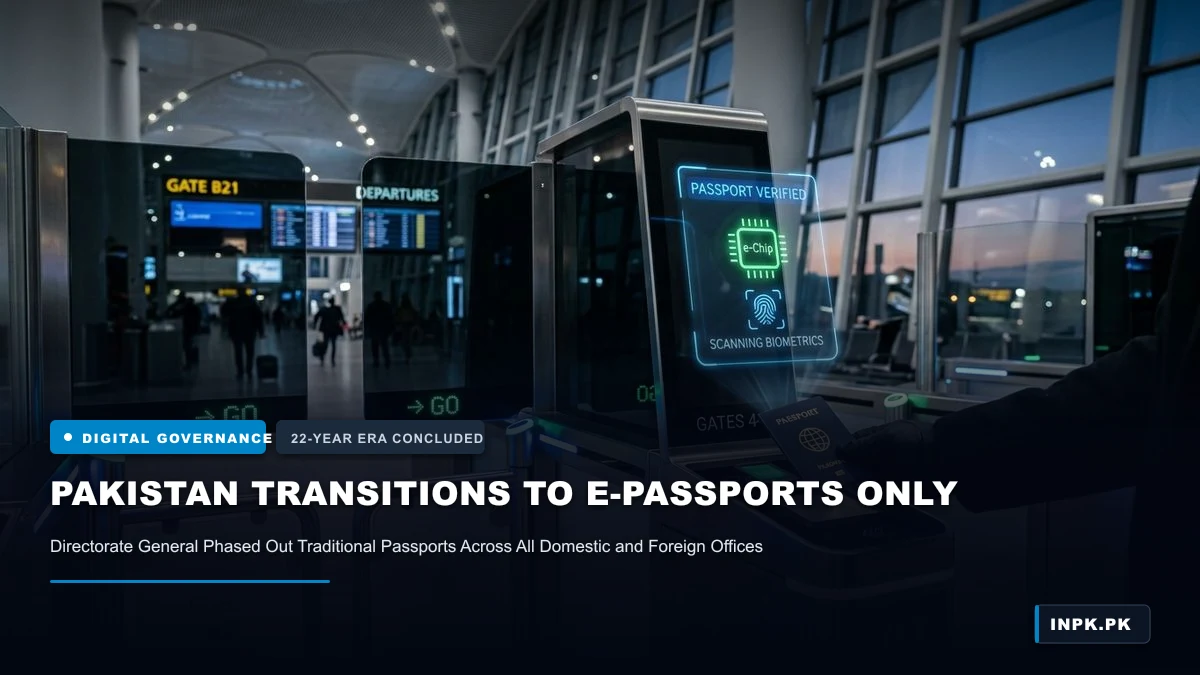
The nationwide deployment of e-passports represents the foundational pillar for automated border control systems at Pakistan's major international aviation hubs. Civil Aviation authorities are completing the installation of automated border e-gates at Islamabad International Airport, Allama Iqbal International Airport in Lahore, and Jinnah International Airport in Karachi.
These automated gates allow e-passport holders to complete immigration clearance within seconds by scanning their digital chip and matching live facial recognition feeds, dramatically reducing airport processing queues during peak travel hours. Furthermore, adoption of ICAO-compliant digital travel credentials is expected to enhance international trust in Pakistan's sovereign passport infrastructure, facilitating expedited visa processing and bilateral transit agreements. To stay informed on citizen documentation, digital public governance, and administrative reforms, browse our national news archives and follow extensive public governance reporting.