
By Zubair
Lahore
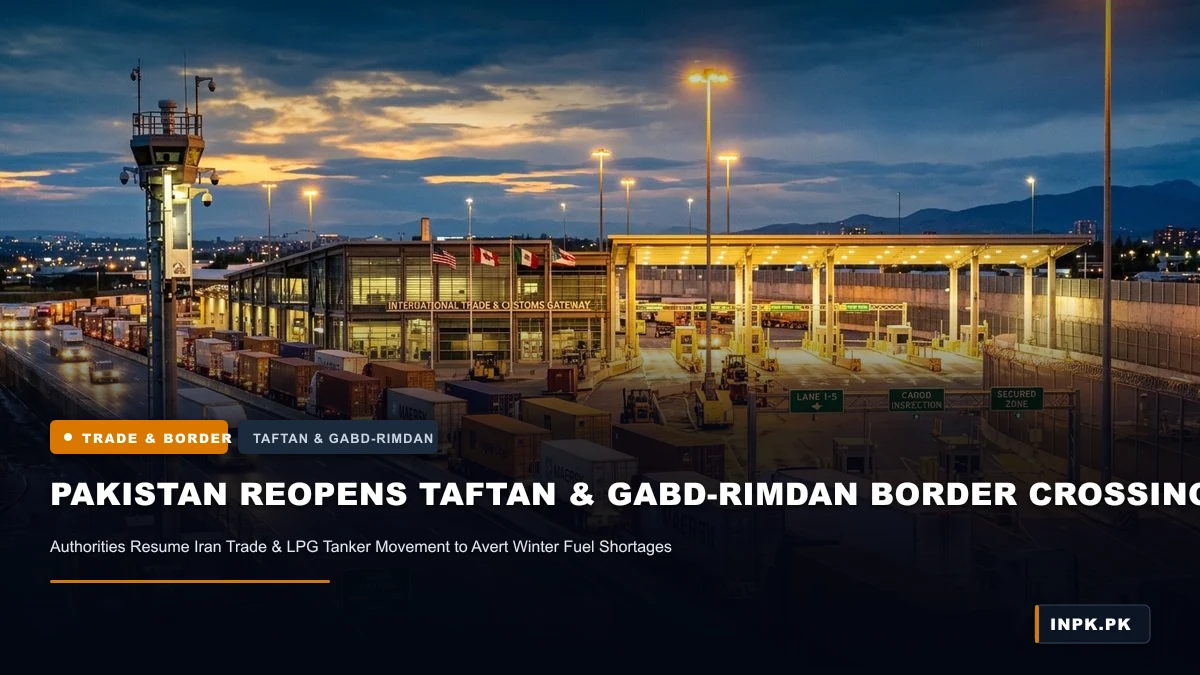
In a decisive move to stabilize cross-border supply chains and prevent domestic energy shortfalls, Pakistani border authorities have officially and partially reopened the Taftan and Gabd-Rimdan international border crossings with Iran. The strategic reopening follows a week-long suspension triggered by regional security threats and operational reassessments across Balochistan, allowing hundreds of stalled freight vehicles carrying essential perishable foodstuffs and vital Liquefied Petroleum Gas (LPG) to resume bilateral transit.
Official customs and security authorities confirmed that cargo clearance operations commenced early Tuesday morning following coordinated consultations between Pakistan Customs, Frontier Corps (FC) Balochistan, and Iranian border administration officials in Mirjaveh and Rimdan. Under the phased operational framework, commercial vehicle traffic was granted priority clearance to relieve severe freight congestion that had accumulated on both sides of the frontier.
Clearing Hundreds of Stranded Agricultural Cargo Trucks
Prior to the resumption of trade operations, more than 600 heavy transport containers were stranded along the arid highway stretches connecting Quetta with Taftan and Gwadar with Gabd. The prolonged bottleneck posed severe financial risks for Pakistani exporters, whose consignments consisted predominantly of temperature-sensitive agricultural goods, including basmati rice, kinnow, bananas, and seasonal vegetables designated for Iranian and regional Central Asian markets.
Customs collectorates at Taftan reported that specialized clearance desks have been operationalized around the clock to expedite document verification, weight inspection, and security scanning. Drivers who had been stranded in makeshift border rest areas for days expressed immense relief as terminal gates swung open, enabling refrigerated cargo trailers to proceed through automated inspection lanes under escort protocols.
Stabilizing Domestic LPG Supplies and Averting Winter Price Hikes
Crucially for Pakistani domestic consumers, the reopening clears the immediate transit of scores of Iranian LPG bowsers and road tankers that had been halted at border terminals. Iran serves as an indispensable source of cost-effective LPG imports for Pakistan, especially during late autumn and winter when seasonal heating demands surge across Punjab, Khyber Pakhtunkhwa, and northern regions.
Energy market distributors had warned earlier in the week that continued border closures would trigger supply shortages and artificial price spikes in retail cylinder markets. The prompt arrival of inbound LPG consignments directly alleviates localized supply panic, stabilizing domestic wholesale rates and ensuring adequate fuel reserves for industrial processing and commercial fleets across the country.
Enhanced Security Protocols and Bilateral Coordination
Border administrators emphasized that while commercial transit has been actively restored, security agencies have instituted stringent monitoring mechanisms to protect logistics corridors. Joint patrolling by paramilitary forces and specialized customs checkpoints has been reinforced along the N-40 National Highway and coastal transit routes to ensure the uninterrupted passage of drivers and valuable freight.
The Taftan and Gabd-Rimdan gateways represent the economic lifeline of Pakistan-Iran formal trade, anchoring bilateral commercial ties aimed at achieving an annual bilateral trade volume of 10 billion dollars. As clearance operations proceed systematically, trade associations have urged both governments to establish permanent institutional mechanisms that insulate commercial trade and humanitarian supply lines from sudden border closures. For continuous updates on regional trade policy and economic developments, examine our national news archives and follow detailed border diplomacy reporting.