
By Zubair
Lahore
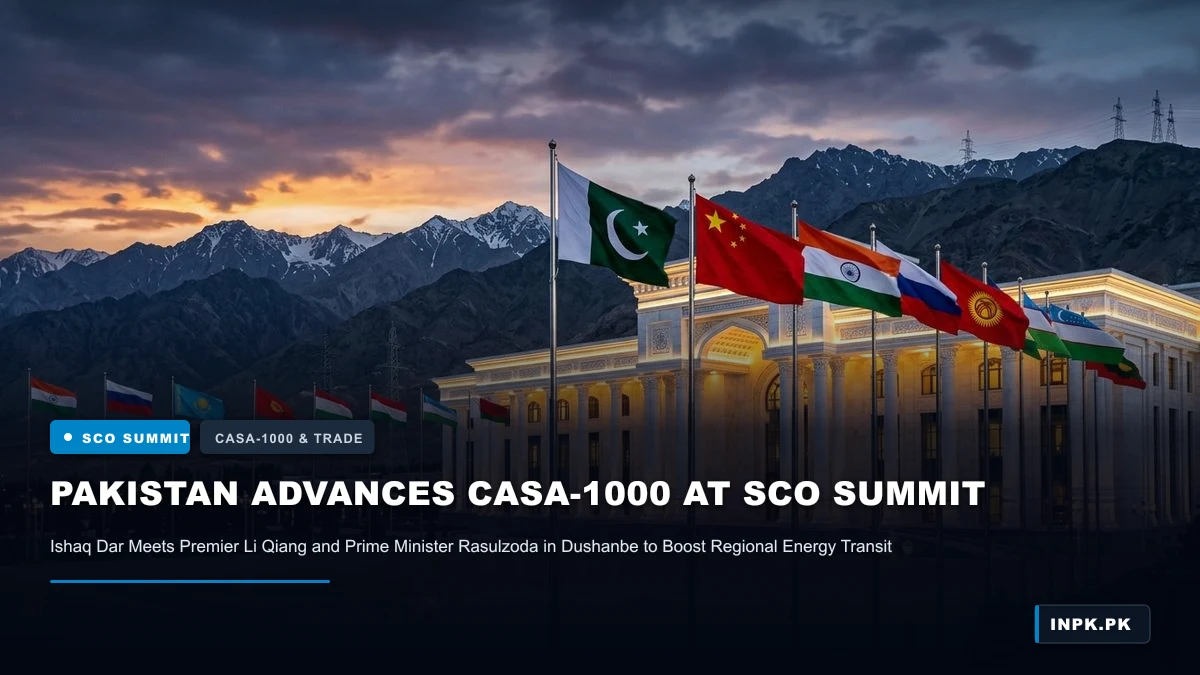
In a major diplomatic push to unlock cross-regional energy security and economic integration, Pakistan has called for the swift operationalization of the Central Asia-South Asia (CASA-1000) clean electricity transmission corridor and the establishment of non-discriminatory transit mechanisms across Eurasia. The position was articulated by Deputy Prime Minister and Foreign Minister Senator Mohammad Ishaq Dar while addressing the plenary session of the 25th Meeting of the Council of Heads of Government of the Shanghai Cooperation Organisation (SCO) in Dushanbe, Tajikistan.
Leading Pakistan's high-level delegation at the invitation of Tajikistan Prime Minister Qohir Rasulzoda, Ishaq Dar underscored that sustainable regional peace is inextricably linked with robust physical connectivity, energy grids, and digital trade networks. He stressed that as the world confronts geopolitical friction and macroeconomic headwinds, the SCO represents an indispensable platform for multilateral cooperation grounded in the historic 'Shanghai Spirit'.
CASA-1000 Power Transmission and Clean Energy Transit
A central pillar of Pakistan's summit agenda in Dushanbe was revitalizing the landmark CASA-1000 infrastructure project, designed to transmit 1,300 megawatts of surplus clean hydropower from the Kyrgyz Republic and Tajikistan to Pakistan via Afghanistan. Addressing regional counterparts, Ishaq Dar highlighted that technical and commercial milestones on Pakistan's domestic converter stations and transmission lines in Nowshera are nearing full readiness, urging partner states to resolve outstanding regional transit protocols without administrative delays.
The Deputy Prime Minister stated that clean energy transfers from Central Asia remain vital for stabilizing Pakistan's industrial power basket, lowering electricity generation tariffs, and reducing reliance on imported thermal fuels. Tajik authorities reiterated their commitment to finalizing high-voltage grid synchronization, affirming that the project will create an enduring commercial bridge linking Central and South Asian energy markets.
High-Level Bilateral Engagements with China and Tajikistan
On the sidelines of the summit, Ishaq Dar held strategic bilateral discussions with Premier of the State Council of the People's Republic of China Li Qiang. The two leaders reviewed progress across the China-Pakistan Economic Corridor (CPEC) Phase Two, focusing on industrial relocations, agricultural modernization, and expanding the Gwadar deep-sea port into a multimodal transshipment hub for Central Asian landlocked states. Both sides reaffirmed their All-Weather Strategic Cooperative Partnership, emphasizing joint coordination on regional stability.
In a separate delegation-level meeting with Tajik Prime Minister Qohir Rasulzoda, Dar reviewed bilateral trade, air connectivity, and transit agreements under the Pakistan-Tajikistan Joint Ministerial Commission. Both governments agreed to simplify visa and customs clearance procedures for commercial freight operators, leveraging Pakistan's road networks from Karachi and Gwadar to Dushanbe.
Multilateral Economic Architecture and 2027 Summit Preparations
During the summit deliberations, Pakistan endorsed collective proposals for the creation of an SCO Development Bank, common customs transit corridors, and local-currency settlement mechanisms to protect regional trade against external financial vulnerabilities. Pakistan's proactive posture at Dushanbe also laid preparatory groundwork as Islamabad prepares to host the flagship SCO Council of Heads of State summit in 2027. For continuous analysis on strategic regional partnerships, follow our national news archives and explore in-depth diplomatic and geopolitical reports.