
By Web Desk
Lahore
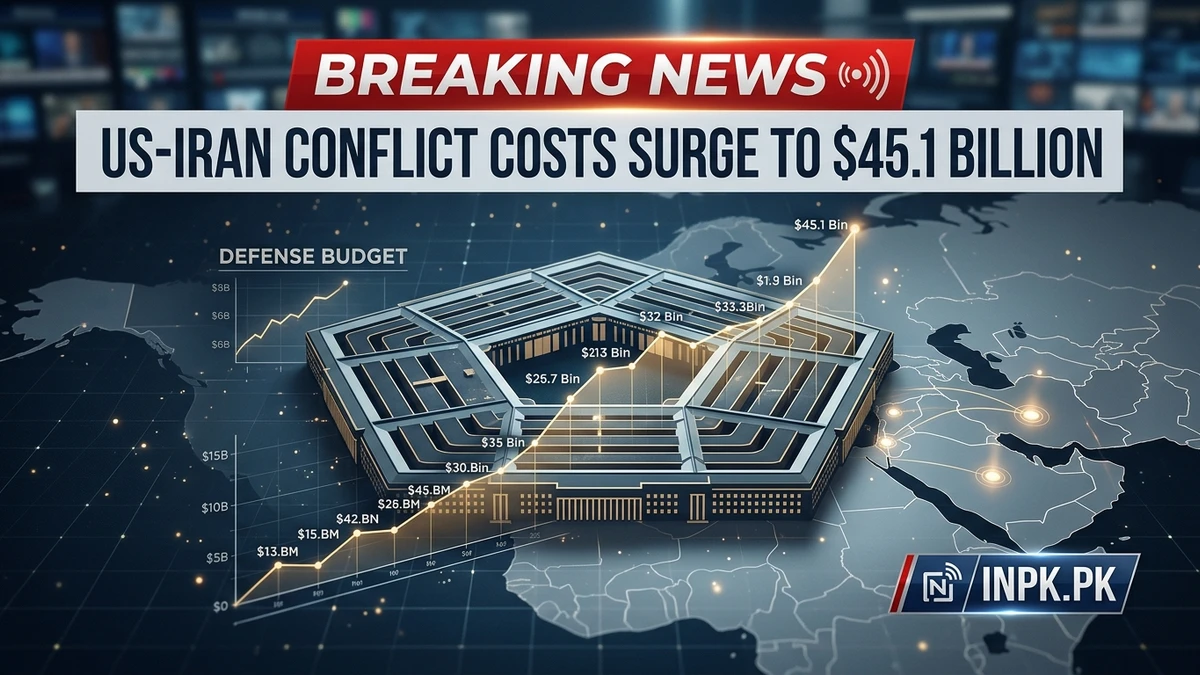
The United States Department of Defense has officially notified Congress that the financial cost of the ongoing military confrontation with Iran has escalated to an estimated $45.1 billion, substantially outpacing earlier legislative budget projections as naval deployments, air defense interceptors, and combat operations across the Middle East continue to mount.
According to formal budget documents submitted to congressional defense committees, the $45.1 billion tally encompasses approximately $43.6 billion in direct war-related operational expenditures incurred through September 3, 2026, alongside an additional $1.5 billion dedicated exclusively to supplemental military fuel requirements. The reported figure exceeds the Congressional Budget Office's (CBO) earlier projection, which had estimated campaign expenditures at roughly $38 billion through early August.
Mounting Expenditure on Interceptors and Carrier Strike Groups
Defense analysts attribute the rapid acceleration in spending to the unprecedented operational tempo maintained by United States Central Command (CENTCOM). Sustained carrier strike group deployments in the Red Sea, Arabian Gulf, and Gulf of Oman, coupled with the frequent expenditure of high-cost Standard Missile-3 (SM-3) and THAAD interceptors to counter ballistic missile and drone barrages, have imposed heavy logistical drains on the Pentagon's procurement accounts.
Pentagon officials cautioned lawmakers that the $45.1 billion figure remains an incomplete accounting of total campaign expenses. The preliminary tally excludes costs associated with structural repairs to military installations and bases damaged during regional strikes, long-term medical care for affected service members, and detailed indirect operational support provided by intelligence and allied task forces.
Congressional Scrutiny and Supplemental Funding Debates
The disclosure has ignited intense debate on Capitol Hill, where lawmakers are preparing to negotiate emergency defense supplemental funding bills ahead of the fiscal year deadline. Fiscal conservatives and anti-interventionist lawmakers have questioned the sustainability of open-ended maritime escorts and kinetic strikes, warning of deepening federal deficits and the depletion of critical munitions stockpiles needed for deterrence in the Indo-Pacific.
Conversely, defense hawks and administration officials argue that robust funding is indispensable to preserving maritime freedom of navigation through the Strait of Hormuz and protecting American personnel, regional allies, and commercial energy corridors from hostile non-state proxies and state-directed aggression.
Economic Ripple Effects on Global Energy and Shipping
The soaring military costs parallel broader economic disruptions across international energy markets, where elevated insurance premiums, redirected commercial shipping routes around the Cape of Good Hope, and localized supply interruptions have kept global oil and freight rates elevated throughout the quarter.
Readers can follow ongoing coverage of global defense budgets, Middle East geopolitics, and international economic developments on INPK news coverage as congressional committees review the Pentagon's comprehensive cost submission.