
By Web Desk
Riyadh
Saudi Arabia has officially resumed commercial crude transmissions through its critical 1,200-kilometre East-West Petroline pipeline, enabling the kingdom to bypass the volatile Strait of Hormuz and restore export flows from Red Sea terminals as international energy markets grapple with acute regional shipping disruptions.
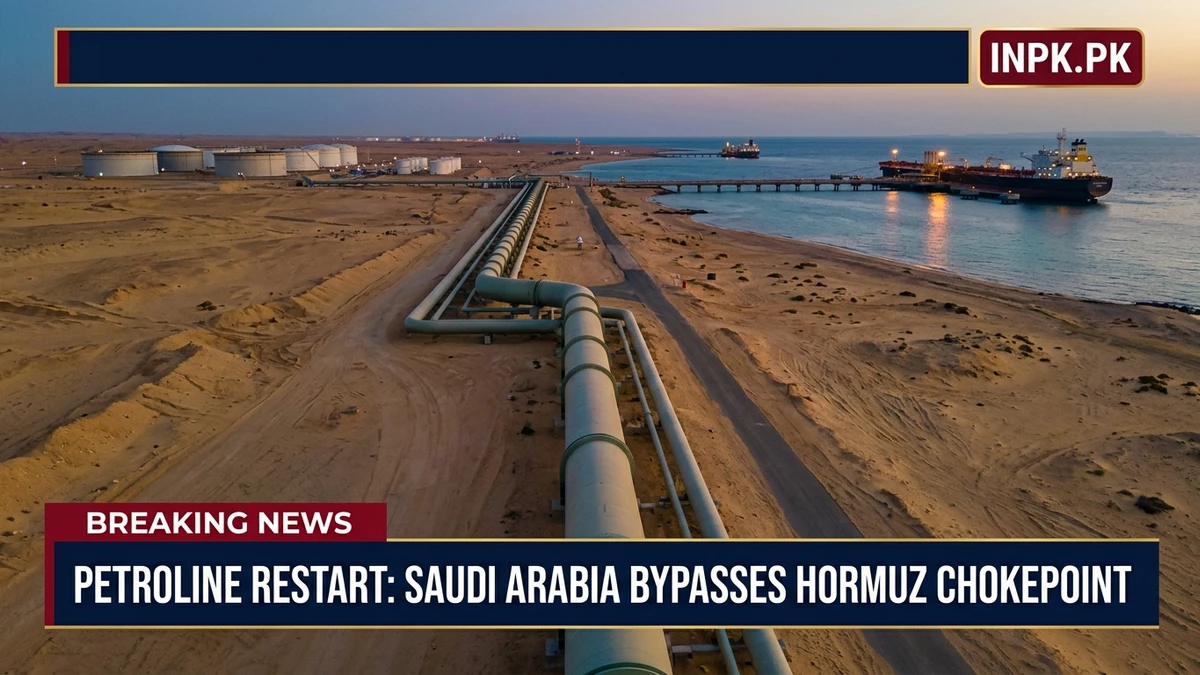
The state-operated pipeline, which connects principal petroleum production facilities in the Eastern Province to the Red Sea port city of Yanbu, resumed operations following intensive technical inspections and infrastructure repairs necessitated by recent unmanned aerial vehicle strikes. The restart restores a critical bypass corridor capable of transporting up to four million barrels per day--representing approximately four percent of total global petroleum consumption--directly to Western export routes without entering Persian Gulf waters.
Strategic Bypass Eases International Market Pressure
Global energy benchmarks responded immediately to the resumption of pumping operations, with crude futures retreating from multi-month peaks as trading desks factored in the return of major export alternatives. The Petroline system serves as Saudi Arabia primary strategic safeguard against maritime interdiction in the Persian Gulf, providing a direct terrestrial bridge across the Arabian Peninsula.
Energy analysts note that while the pipeline initial throughput remains calibrated at reduced volumes while pressure stability tests continue, technicians expect full rated capacity to be re-established within days. The reactivation significantly mitigates supply shortfall risks for European and Asian refineries that had faced spiralling freight insurance rates and logistical delays following naval standoffs along the eastern maritime perimeter.
"The reactivation of the East-West pipeline system demonstrates the resilience of national energy infrastructure and our enduring commitment to stabilizing global hydrocarbon supply chains," a Saudi energy ministry official stated in Riyadh. "By expanding throughput to Red Sea terminals, Saudi Arabia ensures continuous, dependable commercial deliveries to international trading partners regardless of navigational obstacles elsewhere."
Red Sea Navigation and Ongoing Bab al-Mandab Security Protocols
While the pipeline restart alleviates bottlenecks around the Strait of Hormuz, maritime logistics experts caution that export tankers departing Yanbu still face complex security dynamics as they navigate southward through the Red Sea toward the Bab al-Mandab strait and the Gulf of Aden.
Regional naval coalitions and international maritime security coordination centres have maintained heightened patrol postures throughout the southern corridor, where regional missile and maritime drone activities have previously forced commercial vessels onto protracted diversion routes around the Cape of Good Hope. Saudi maritime authorities confirmed that dedicated escort coordination and integrated radar monitoring networks remain active to safeguard commercial vessels clearing Yanbu anchorage.
Major commercial shipping syndicates have welcomed the pipeline reopening as a stabilizing breakthrough, though maritime insurers have indicated that elevated war-risk premiums for Red Sea transits will likely persist until comprehensive multilateral security guarantees are confirmed across coastal waterways.
Broader Geopolitical and Economic Implications
The operational restoration arrives at a pivotal juncture during the 81st United Nations General Assembly high-level debate in New York, where diplomatic delegations have focused heavily on securing international trade lanes and preventing localized conflicts from triggering global inflationary shocks.
By demonstrating operational redundancy and securing alternative export outlets, Riyadh has reinforced its role as a stabilizing anchor in international commodity markets. Observers emphasize that long-term energy security will depend on whether parallel diplomatic talks in Manhattan can achieve broader demilitarization agreements covering critical international shipping chokepoints.
Stay informed on global energy markets, international shipping security, and developing Middle East diplomacy with continuous updates on INPK world news coverage.