
By Web Desk
Lahore
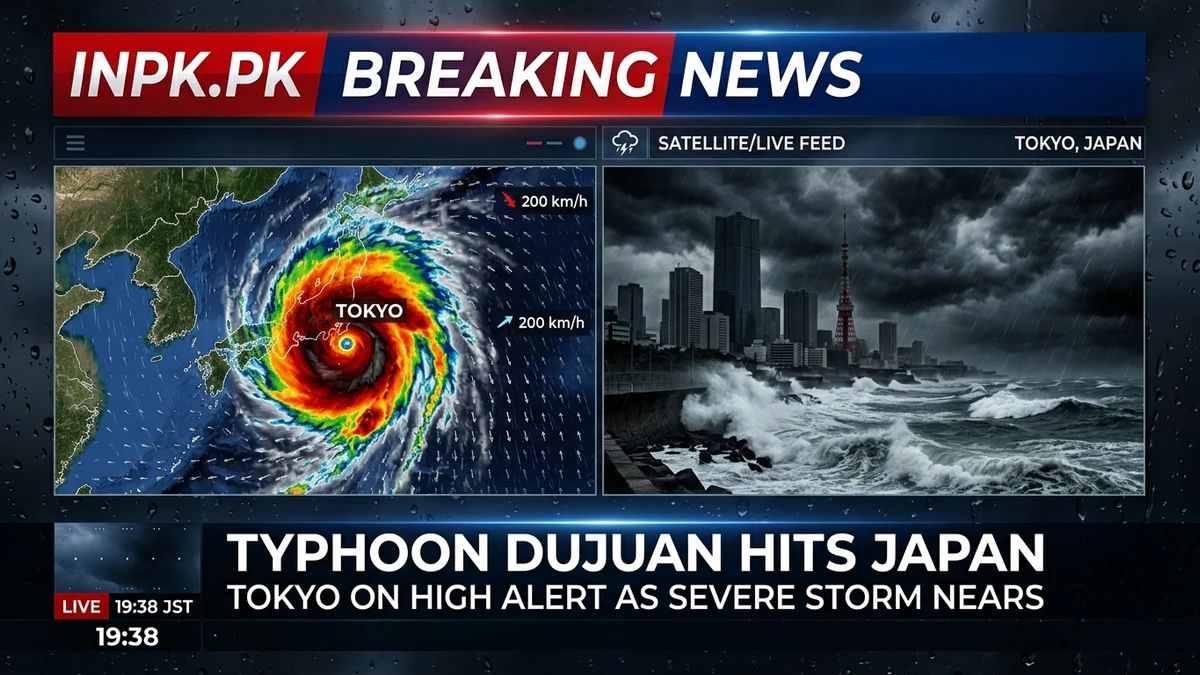
The Japan Meteorological Agency has issued emergency weather warnings across the Kanto-Koshin region and the Greater Tokyo metropolitan area as Typhoon Dujuan, a powerful Pacific storm packing maximum wind gusts of up to 198 kilometers per hour, bore down on the nation's eastern seaboard on Monday.
Designated as Typhoon No. 25 of the 2026 Pacific typhoon season, the storm system tracked north-northeast past Hachijojima Island with a central atmospheric pressure of approximately 960 hectopascals and maximum sustained winds reaching 144 kilometers per hour. Forecasters warned that the eye of the typhoon is projected to pass closest to coastal Tokyo, Chiba, and Kanagawa prefectures late Monday evening through the early hours of Tuesday, bringing torrential rainfall capable of triggering catastrophic flash floods and landslides.
Linear Rain Bands and Heavy Precipitation Alerts
Meteorologists cautioned that atmospheric conditions are primed for the formation of "linear rain bands" - dense, stationary corridors of cumulonimbus storm clouds that unleash sudden, intense deluge across localized zones. The meteorological agency alerted residents that total precipitation in mountain catchments and low-lying coastal areas could surpass 300 millimeters within a twelve-hour span, potentially exceeding the entire average rainfall typically recorded for the month of September.
Authorities have urged residents across eastern Japan to remain on highest alert against overflowing rivers, severe urban drainage inundation, and storm surges along Tokyo Bay. Municipal governments across Chiba and Kanagawa have activated emergency shelters and issued Level 3 and Level 4 evacuation advisories to hundreds of thousands of elderly and vulnerable citizens residing near steep hillsides and river embankments.
Widespread Flight Cancellations and Transit Paralysis
The tempest has unleashed widespread disruption across Japan's national transportation networks during the busy autumn Silver Week holiday period. Major domestic carriers Japan Airlines and All Nippon Airways confirmed the cancellation of more than 275 commercial flights, primarily affecting flight operations into and out of Tokyo's Haneda and Narita international airports.
Railway operators, including East Japan Railway Company, proactively suspended commuter lines and adjusted operations on high-speed Shinkansen bullet train routes traversing central and eastern corridors. Regional ferry services connecting the Izu archipelago were halted as maritime authorities registered offshore waves reaching eight meters.
Tokyo Game Show and Asian Games Events Impacted
The severity of the approaching storm forced organizers to cancel the final day of the Tokyo Game Show at Makuhari Messe convention center in Chiba Prefecture, turning away thousands of domestic and international visitors to prioritize public safety. Major public attractions in the capital, including the Ueno Zoological Gardens and Tokyo Sea Life Park, suspended operations and secured animal enclosures against gale-force gusts.
In central Japan, organizers of the 20th Asian Games in Aichi and Nagoya announced emergency schedule adjustments, postponing outdoor equestrian competitions scheduled at Tokyo's Baji Koen Equestrian Park due to deteriorating weather conditions. Meanwhile, regional utility providers reported thousands of localized electrical blackouts across coastal Chiba as falling branches damaged overhead power transmission cables.
Emergency Directives and Evacuation Guidance
The Japanese government established an emergency liaison room at the Prime Minister's Office Crisis Management Center to coordinate rapid disaster response operations alongside municipal fire departments, police agencies, and the Self-Defense Forces. Officials warned members of the public against traveling unnecessarily and instructed commuters to steer clear of underground concourses, subways, and basements where stormwater can accumulate rapidly.
Readers can track ongoing severe weather developments, emergency municipal updates, and regional transit advisories through continuous INPK world news coverage as Typhoon Dujuan moves across eastern Japan.